


Hit a Pothole in DC? How to Tell If Your Tire or Wheel Is Damaged
Nov 2, 2026 · 4 min read · TB Roadside Assistance
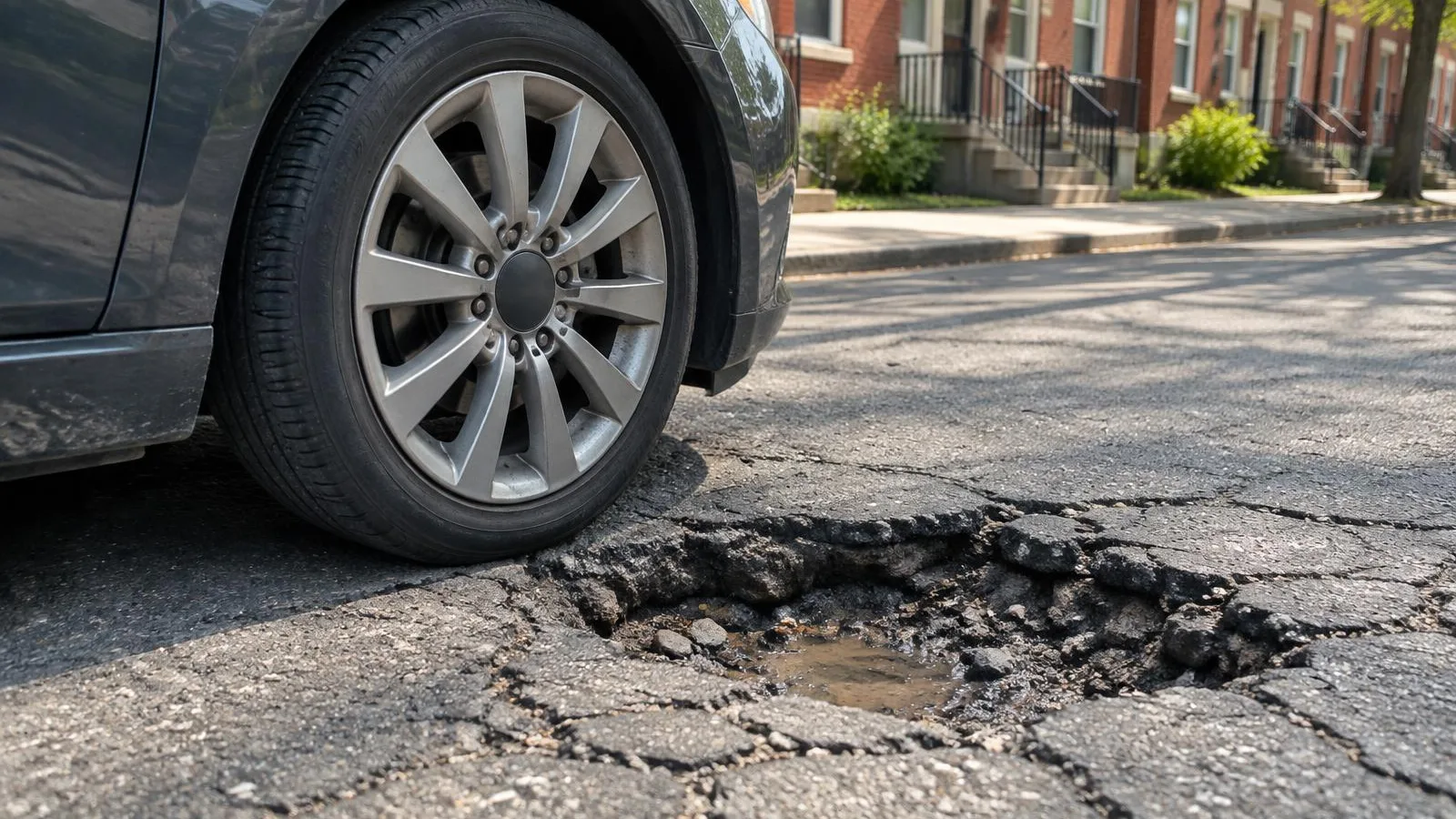
Every driver in DC knows the sound: a hard bang as a front wheel drops into a hole you didn't see in time. Sometimes the car drives off fine. Sometimes the damage shows up a mile later as a pull in the steering wheel, a thumping noise or a tire that's suddenly low. Potholes get worse every winter, when water seeps into cracks, freezes, expands and breaks the pavement apart, so late winter and early spring are rough on tires around DC and Prince George's County.
Here's how to tell whether that hit did real damage and what to do about it.
Right after the hit: get somewhere safe first
Don't stop in a travel lane to look. If the car still drives normally, keep going to a parking lot, a side street or a gas station where you can get out safely. If the steering suddenly pulls hard, the car shakes badly or you hear a flapping or grinding noise, slow down, turn your hazards on and pull over as soon as it's safe.
5 signs the pothole damaged your tire or wheel
- A bulge or bubble on the sidewall. This is the big one. A bubble means the inner structure of the tire was cut and air is pushing against the outer rubber. A tire with a sidewall bubble can blow out without warning. Don't drive on it any farther than you must.
- The tire pressure light comes on. A sudden warning after a hit can mean a puncture, a damaged valve stem or a bent rim that no longer seals against the tire.
- Vibration or a wobble in the steering wheel. A bent wheel or a shifted tire often shows up as a shake that gets worse with speed.
- The car pulls to one side. A hard hit can knock the alignment out or damage suspension parts.
- A visible dent or crack on the rim edge. Look at the outer lip of the wheel. Even a small bend can let air leak out slowly.
How to check your tire (without getting hurt)
Park on level ground, away from traffic, with the engine off and the parking brake on. Then:
- Look at both sidewalls of the tire that took the hit, inside and outside if you can see it. Run your eyes along the full circle looking for bubbles, cuts or chunks missing.
- Check the tread for anything stuck in it. Potholes collect debris, screws and broken metal.
- Check the pressure with a gauge if you have one. The correct pressure for your car is on a sticker inside the driver's door jamb, not on the tire itself.
- Look at the wheel's edge for dents or cracks.
| What you see | What it usually means | What to do |
|---|---|---|
| Sidewall bubble or cut | The tire is damaged inside | Don't drive on it. Spare or new tire. |
| Low pressure, no visible damage | Slow leak, valve or bent rim | Air it up and watch it, or have it checked |
| Nail or screw in the tread | Puncture | Often repairable with a plug or patch |
| Shake or pull, tire looks fine | Wheel, balance or alignment | See a shop soon |
When the tire can be fixed and when it can't
A clean puncture in the tread area can often be repaired. Damage to the sidewall or the shoulder (the curved edge between tread and sidewall) can't be safely repaired, and that tire needs to be replaced. A bent wheel is a job for a tire or wheel shop. What we can do on the spot is get a safe tire on the car so you can get there.
What to do if you're stuck
- You have a good spare: a flat tire change gets you rolling. Remember that many spares are temporary "donut" tires with a lower speed limit printed on the sidewall.
- No spare, or the spare is flat too: a new tire delivered and installed where you're parked saves you a tow.
- The car isn't safe to drive: a tow to your shop is the right call.
Make the next pothole hurt less
- Keep your tires at the right pressure. Underinflated tires take a lot more damage from potholes.
- Leave space behind the car in front of you so you can see holes coming.
- Don't brake while you're in the hole. Brake before it, then let off as the wheel goes in. Braking hard in the hole puts more force on the tire and suspension.
- Watch puddles. A puddle can hide a deep hole.
Stuck after a pothole in DC or PG County?
TB Roadside covers all of Washington DC, Hillcrest Heights and the rest of Prince George's County 24/7. Call (877) 265-9250. You'll get the price on the phone before we roll.
FAQ
Quick answers
It isn't safe. A bubble can burst without warning, especially at highway speeds. Put the spare on or have a new tire installed.
The hit may have caused a puncture, damaged the valve stem or bent the rim so it leaks. Check the tire and the pressure as soon as you're parked safely.
Not always, but it needs a tire or wheel shop to check it. Until then, a good spare is the safest way to keep driving.
Keep going
Related help
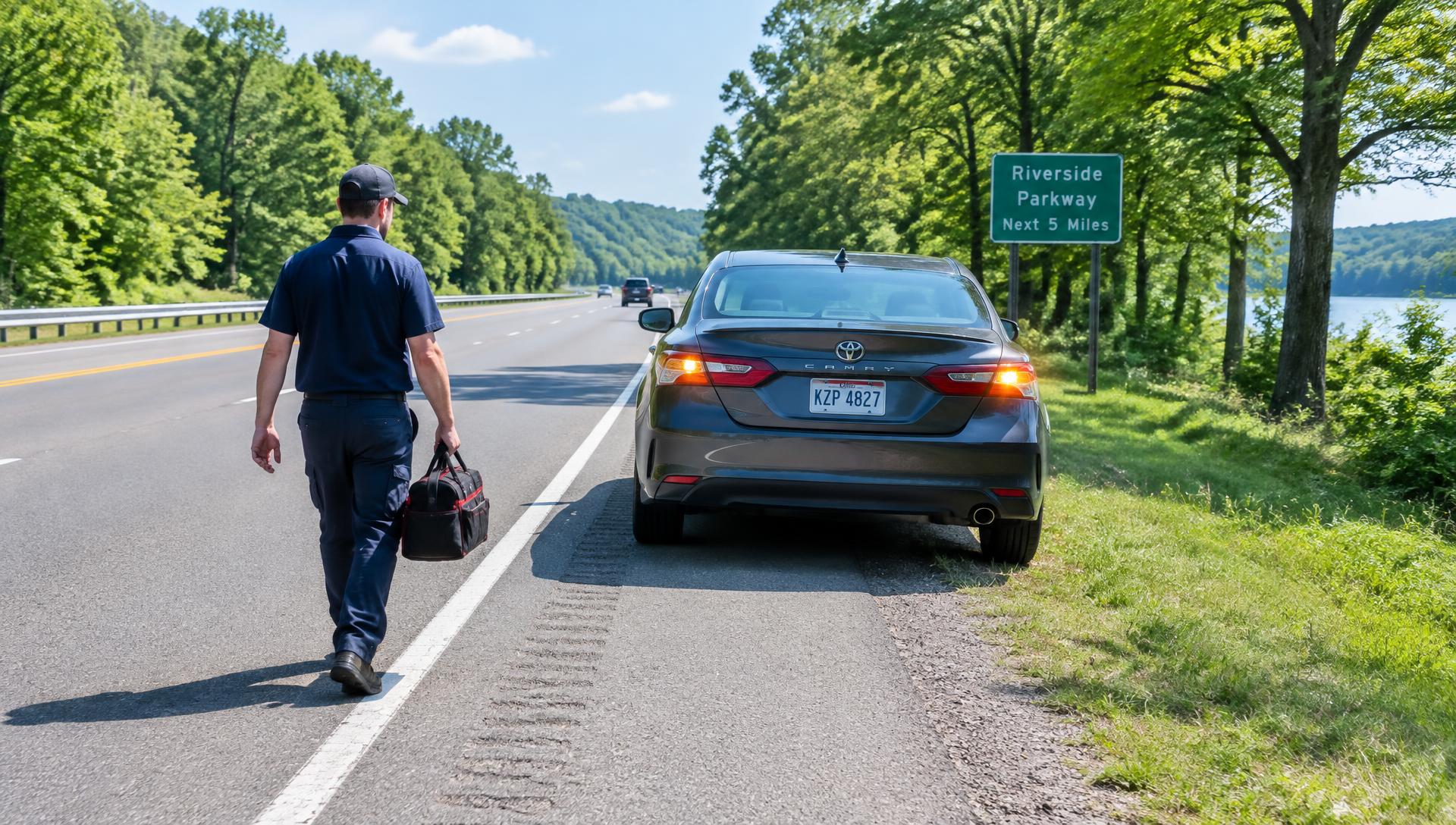
Stuck right now?
Call Torrell. 24/7 across DC, MD and VA.
- Open 24/7 — nights, weekends and holidays
- Washington DC, Maryland & Northern Virginia
- Price agreed up front, before we roll
- Military discount available